|
|
||||||||||||||||||||||||||||||||||||||||||||||||||||||||||||||||||||||
|
HOME | THE FUTURE TODAY | BUSINESS NEED | COURSE REGISTRATION | CONTACT |
||||||||||||||||||||||||||||||||||||||||||||||||||||||||||||||||||||||
|
So,
what are the business needs, and yours? |
||||||||||||||||||||||||||||||||||||||||||||||||||||||||||||||||||||||
|
Why your company needs you to acquire
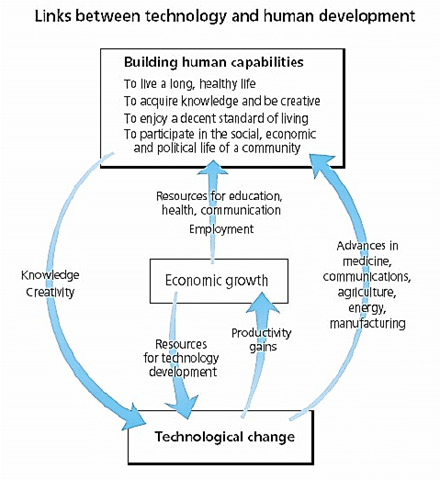
the new age skill set!? The diagram below, in an effective way, shows the links between technology innovation, economic growth and human development. The link between technology innovation and increment of the human capabilities is direct. However, the technology innovation is the expression of the human potentialities (a high level of scholarship leads to the creation and the diffusion of the technology). As for humanity across the board, it is critical that they adopt evolving technology so as to ensure their future.
Image Credit: United
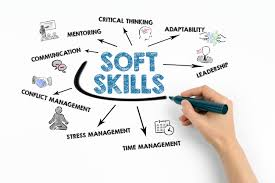
Nations Development Programme Consulting firm, McKinsey predicts that 800 million workers could be displaced in 42 countries, or a third of the workforce, because of Industry 4.0 and Industry 5.0. South Africa, on the whole, is a late adopter, and we have millions of people without the right qualifications and/or experience. To work in Industry 4.0 and Industry 5.0 environments, you will need a matric plus a 3-year diploma and/or a degree, and even perhaps two degrees. About 56% of South Africa’s workforce do not have a matric and 34.1% only have a matric certificate, according to Statistics SA. By 2025, the shift of jobs from humans to machines will result in the loss of millions of jobs but, on the other hand, millions of new jobs will be created – but only suitable for people with the right qualifications and skills. Besides your hard skills, which you learn at school and university, your new age skills are vitally important to secure your future. New age skills, like problem resolution, creativity, commitment and motivation can make you a long-term asset to your employer. Your work ethic and professionalism are important indicators of suitability for a job. This will help you distinguish yourself from other people competing for the same position.
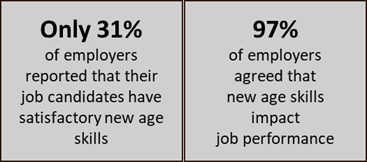
Which means two thirds of employers could improve their productivity and overall profitability. An opportunity not to be missed!! SUCCESS
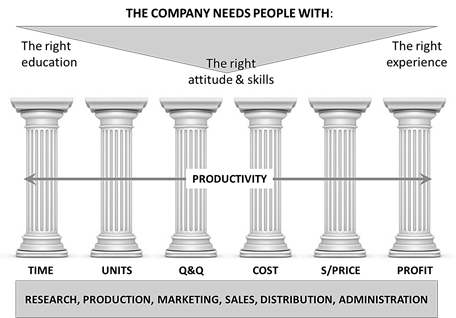
and PROFITABILITY are ACHIEVED through PRODUCTIVE PEOPLE Regardless
of the fact that we are entering Industry 4.0 and Industry 5.0 environments,
where GAI and robotics will play a pivotal role in the success of any
venture, big or small, people are and will still be needed. In the final
analysis, success is entirely dependent on the people within an organisation,
and across every function. “Do
your have the right attitude, and skills?” Attitude
is a predisposition or tendency to respond positively or negatively towards a
certain thing, idea, situation or person. Attitude influences an individual's
motivation, choice of action, responses to challenges and approach to work.
People with the right attitude, and equipped with the necessary set of soft
skills, will make them your biggest asset. Your attitude
and skills will determine your altitude! With
the wrong attitude you could drag yourself down and fall short of your goals
and objectives, and that of your company. If you focus on developing the
correct attitudes, and acquire the right set of new age skills, you will have
a greater level of success in your life.
Adversity
is part of success. Your ability to overcome adversity is critical. It is
what dictates your attitude and altitude. If you want to climb that corporate
ladder of success, you need to develop your new age skills. Turn a weakness
into a strength, A
GAI and/or robot does not have any emotions. It is cold and calculating. But,
therein is your opportunity. A threat if you do nothing. Develop new
knowledge, your new age skills. This is your future! WATCH:
|
New age jobs and lost jobs, 2024-2030! Projected job creation (blue) and displacement (purple) between 2023 and 2027, as a fraction of current employment, for the global employee data set studied in this report. The projected net growth or decline for each occupation in the next five years (diamonds) calculated by subtracting the two fractions. The projected structural labour-market churn for each occupation in the next five years is the sum of the two fractions, and is indicated by the full width of the bars. Averaged across occupations, structural labour-market churn represents 23% of current employment. Below in no specific order are:
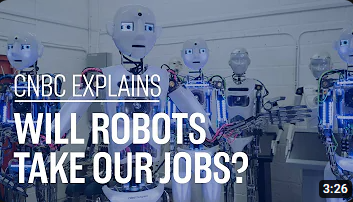
Humanoid robots are your competition: Key Technological
Advancements Integrating multimodal AI and Large
Language Models (LLMs) means humanoids don't just follow hard-coded paths.
They can assess unpredictable environments, self-correct mistakes, and hold
natural conversations. Highly sensitive tactile sensors and
multi-articulated fingers allow robots to grasp, sort, and handle fragile objects
(like folding laundry or threading a needle) with near-human precision. Modern humanoids feature exceptional
balance, allowing them to run, jump, navigate staircases, and recover from
pushes. Advanced models use artificial muscles and dozens of active joints to
achieve a natural human gait Real-World
Applications Companies
like Tesla, Figure AI, Boston Dynamics, and China’s AgiBot
are deploying robots in manufacturing plants to perform heavy lifting, sort
parts, and handle repetitive labor to offset
workforce shortages. Startups
are developing companion robots equipped with sensitive "artificial
skin" designed to assist the elderly with getting up, fetching items,
and doing household chores. Robots
like 1X’s NEO and AgiBot’s A2 are now available to
early access customers and commercial firms. But robots have weaknesses!! ● Limited adaptability: Most robots are designed for specific tasks or environments and lack the flexibility to adapt to new situations or environments without reprogramming or significant modifications. ● Sensory limitations: This can impact their ability to perceive and interact with their surroundings accurately. ● Complexity of tasks: While robots excel at repetitive and structured tasks, they struggle with tasks that require complex decision-making, creativity, and intuition. ● Emotional intelligence: Robots lack emotional intelligence and empathy, making it difficult for them to understand human emotions, intentions, and social cues. ● Ethical and moral decision-making: Robots lack the ability to make ethical or moral decisions in the same way humans do. This raises important questions about the ethical implications of deploying robots in various roles, particularly those involving human interaction or decision-making.
It’s in these areas that you can
acquire |
|||||||||||||||||||||||||||||||||||||||||||||||||||||||||||||||||||||
© Copyright Tony Stone, South Africa
2024